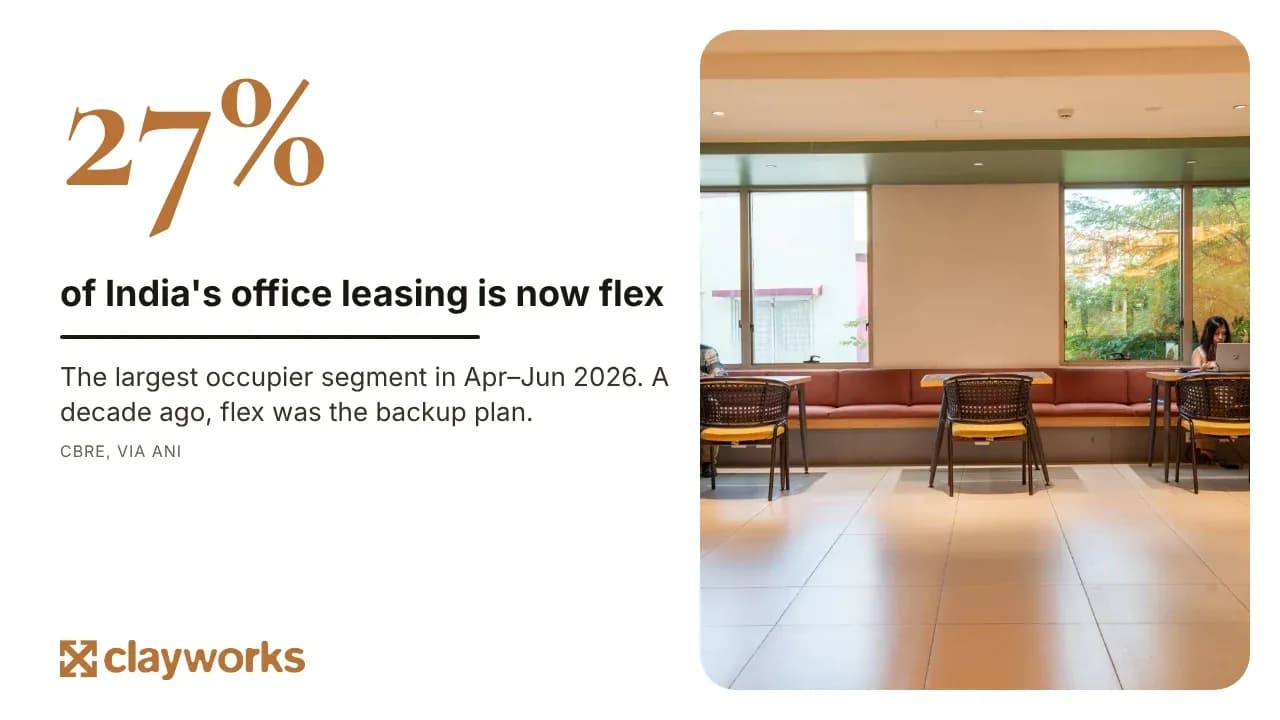
21% and a grade of C
In Steelcase's research, 21% of employees said their main workspace had been updated in the past year. They still gave their overall workplace an average grade of C (Steelcase, Work Better magazine, Summer 2026). Fresh paint and new chairs, it seems, do not make a place people love.
So what does? The same research points to something simpler than a refurbishment budget: variety.
The 63% problem
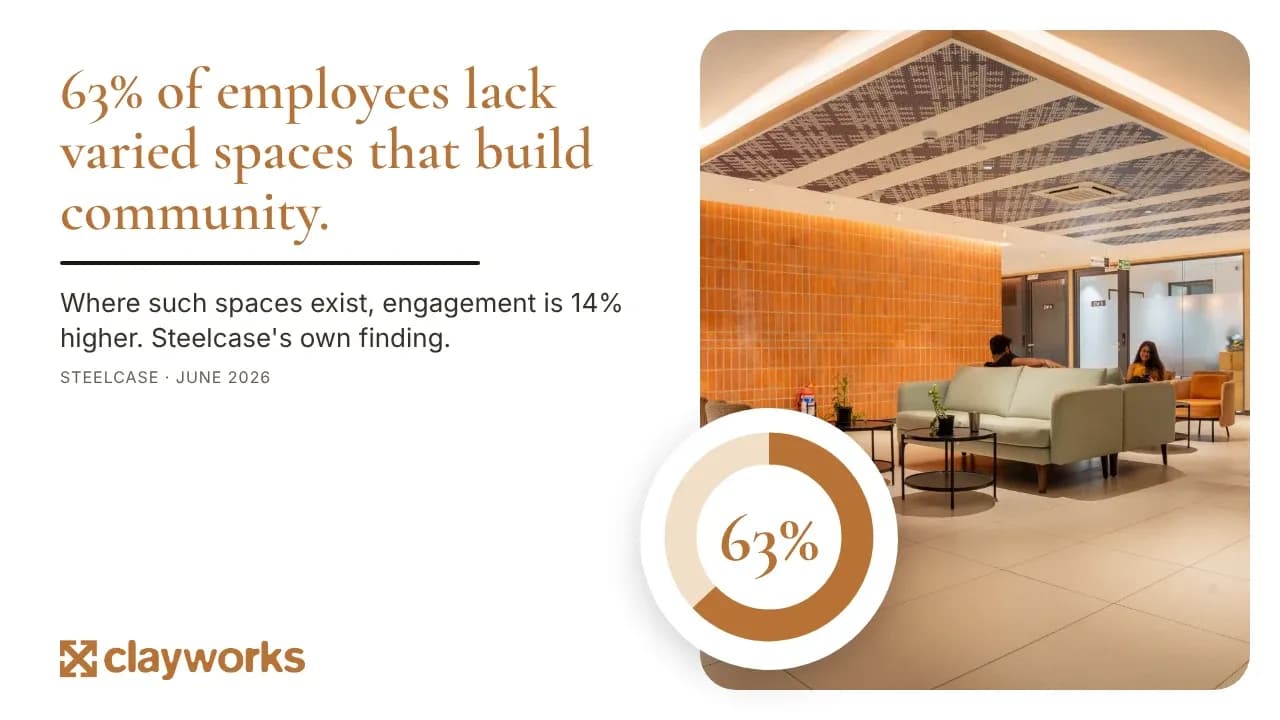
Steelcase found that 63% of employees globally have access to two or fewer kinds of workplace space (it calls them "districts"), and only 37% have three or more. Employees with three to five districts reported 14% higher engagement, 16% higher sense of community, 13% higher wellbeing and 8% higher productivity. They also showed 8% lower likelihood to leave and 3% lower burnout (Steelcase). Steelcase sells workplace furniture, so treat these as the company's own findings. The pattern is still worth taking seriously.
In plain terms, a workplace works like a small town. A town with one street feels cramped, however nice the street.
Why rooms of the wrong shape cost you
One reason offices disappoint is that they are built for the meeting nobody has. In Steelcase's analysis, large conference rooms make up nearly 60% of meeting space, yet 80% of meetings involve one to three people (Steelcase). The floor plan answers a question the calendar is not asking.
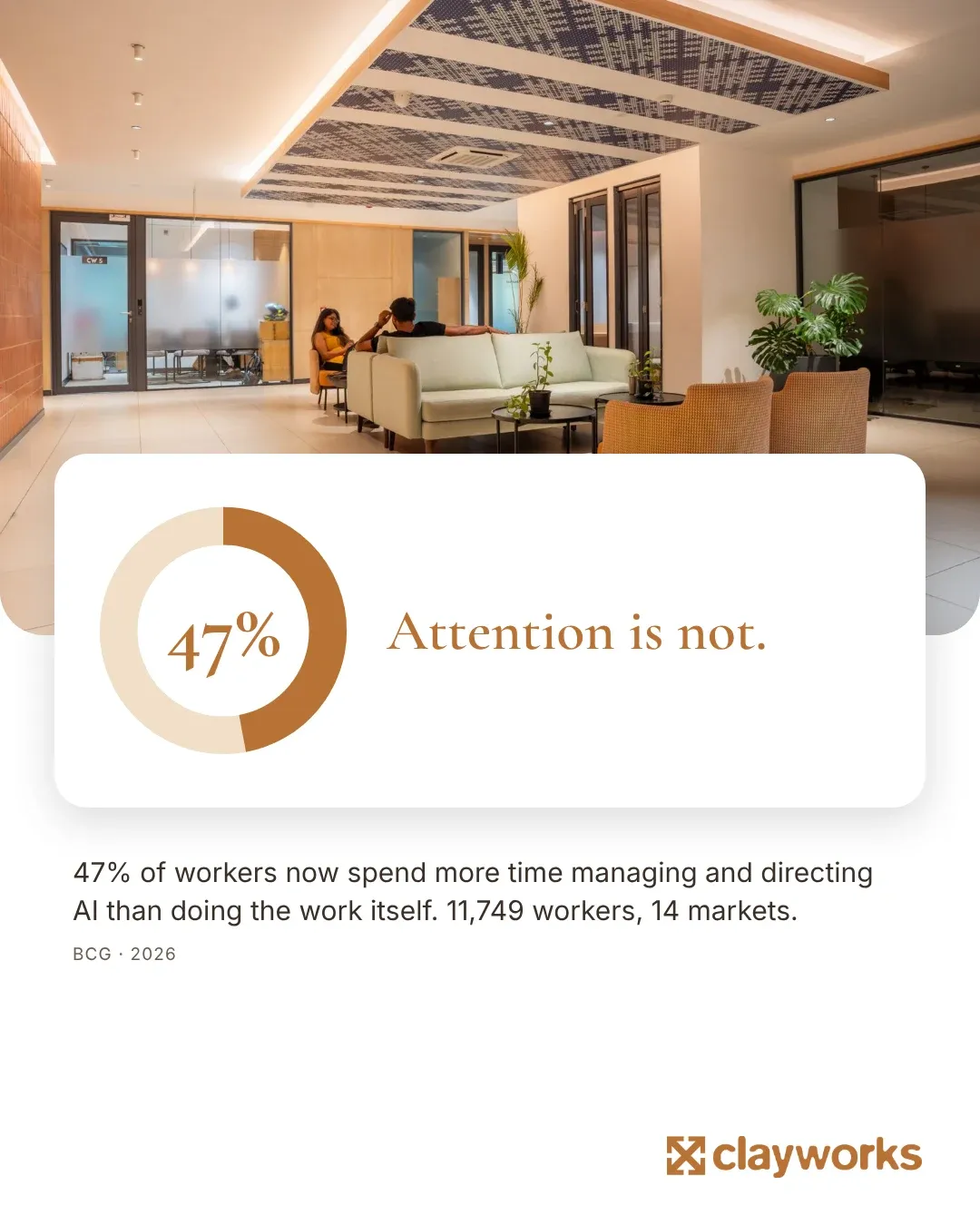
The other reason is attention. Dr. Gloria Mark of UC Irvine has found that the average attention span fell from about 2.5 minutes to 47 seconds, with workers interrupted roughly every two minutes (the sources give different start years, 2004 and 2007). Steelcase adds that 59% of working time is spent on screens, rising to 71% when people work alone, and that 39% take video calls at their desks although only 19% prefer to. In a Steelcase study with the University of Wisconsin–Madison's Center for Healthy Minds, people with visual privacy showed better sustained attention and made fewer errors than people at an open bench, despite identical noise (Steelcase).
The modern workspace, then, has two jobs. It must protect focus. And it must give people somewhere to meet that is the right size and the right mood.
A café that belongs to the neighbourhood
A good example sits at PUMA's global headquarters in Herzogenaurach, Germany. The company opened a café beside its concept store, designed with Steelcase using what it calls community-based design, an approach borrowed from urban planning. It serves employees, shoppers and local residents. It has open areas for conversation, protected alcoves for focus, enclosed rooms for private calls, and a monthly social event open to the wider community. It took about six months from planning to opening (Steelcase). PUMA's own line sums up the intent: "Everyone is invited in."
What a neighbourhood looks like on our floors
This is how we think about Clayworks. At Opus on Richmond Road, Bengaluru, there are open corners for easy conversation, meeting rooms for teams of 6 to 25, a podcast room, a quiet prayer room, and an open-air terrace with foosball, table tennis, PS5 and pool. Each is a different answer to a different kind of day. Counting them against Steelcase's "districts" is our shorthand, not a measured comparison. The idea is the same: give people more than one kind of place to be.
We call the people in our spaces Claymates. A member rents a seat. A Claymate belongs somewhere.
Count your districts
Try this at your own office, this week. These are practical prompts, not research findings.
- Where can someone work in silence without wearing headphones?
- Where can two people talk without booking a room for ten?
- Where can a team gather for something other than a meeting?
- Where can a person step away, breathe, or pray?
- Where would a stranger from the neighbourhood be welcome?
If you struggled past the second question, you know where to start.
Your turn
Founders and Claymates, which space at your workplace do people actually use, and which one only looks good in photographs? Tell us in the comments.
Join the conversation on LinkedIn