36 minutes and 9 seconds
That is how long it took, on average, to drive 10 km in Bengaluru in 2025, two minutes longer than a year earlier. In the evening rush it stretched to 45 minutes and 27 seconds, at an average speed of 13.2 km/h (TomTom Traffic Index). Anyone who works here already knows the feeling. The numbers only make it official.
This piece is about what that commute is doing to the way a city works: where people want to sit, which office habits are returning, and which ones are non-negotiable, whatever the traffic.
Bengaluru by the numbers
| What was measured | Figure | Source |
|---|
| Average time to drive 10 km, 2025 | 36 min 9 s, up 2 min 4 s on 2024 | TomTom |
| Evening rush hour, 10 km | 45 min 27 s at 13.2 km/h | TomTom |
| Rank among the world's most congested city centres, 2025 data | Second, behind Mexico City | TomTom, January 2026 |
| Average one-way commute of the city's tech workforce | About 50 minutes | MoveInSync report, via Deccan Herald |
| Namma Metro, operational network | 96.10 km, 83 stations; about 916,000 average daily riders in April 2026 | Wikipedia, Namma Metro |
The commute figure comes from a 2025 report, and the article does not give its sample size. The metro figures are from a Wikipedia summary, so check them against BMRCL before quoting them.
What changed in the city
The biggest recent change is underground and overhead. The Yellow Line, running from RV Road to Bommasandra, opened in August 2025, and ridership touched a record of about 1.05 million on 11 August 2025 (Wikipedia). The Pink and Blue Lines are still under construction, and their opening dates have shifted repeatedly, so we will not quote one.
The second change is human. On the Outer Ring Road, 26 major tech parks employ more than 800,000 people. In September 2025, as companies began calling staff back, traffic experts expected ORR traffic to rise by 10 to 15% from October, and BMTC began running feeder buses into tech parks (Deccan Herald). That was a forecast, and we have not seen the outcome. The industry body quoted attributed the return partly to AI and visa news, describing a "renewed competitive spirit" among employees. That is one association's view.
How people want to work
The best evidence on hybrid work is a randomised trial at Trip.com involving 1,612 employees in Shanghai. Staff who worked from home two days a week showed no difference in productivity or promotions over up to two years, and resignations fell 33% among those who moved from full-time office work to hybrid. The drop applied to non-managers, and women, non-managers and people with long commutes were least likely to quit (Stanford Report). It is a Chinese company, not an Indian one, but a 50-minute commute is a 50-minute commute.
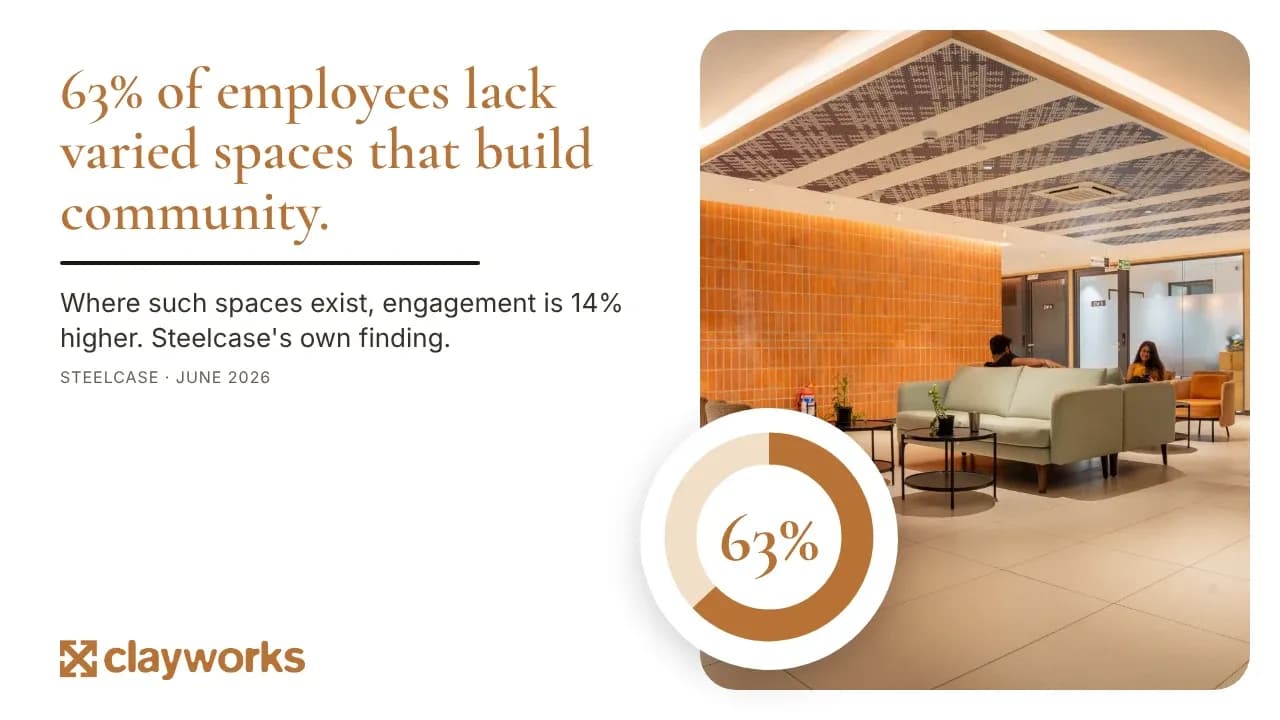
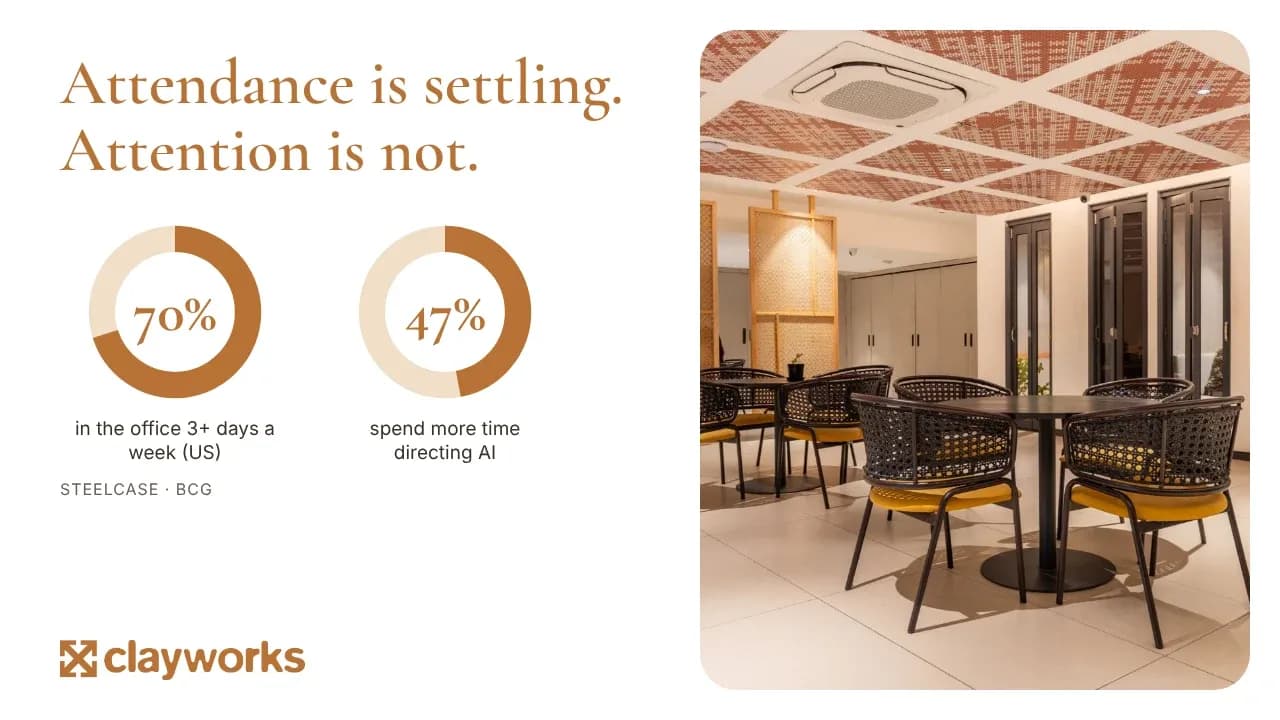
On the other side, Steelcase's global research finds that engagement drops when people spend 80% or more of their time on screens alone, and that 71% of working time is spent on screens when people work alone (Steelcase). People want the freedom of hybrid and the company of others. The question is where to put the second half.
Four hot takes on where to work from
These are our opinions, not research findings. Argue with them.
- The best office is the one closest to your life, not the one with the best lobby. A 50-minute one-way commute is about 8 hours and 20 minutes a week on the road, a full working day, by simple arithmetic.
- Working alone at home all week is a slow way to lose a team. The screen-time data points that way.
- Hybrid is not a compromise. It is the default the evidence supports. The Trip.com trial found no cost to productivity and a clear gain in retention.
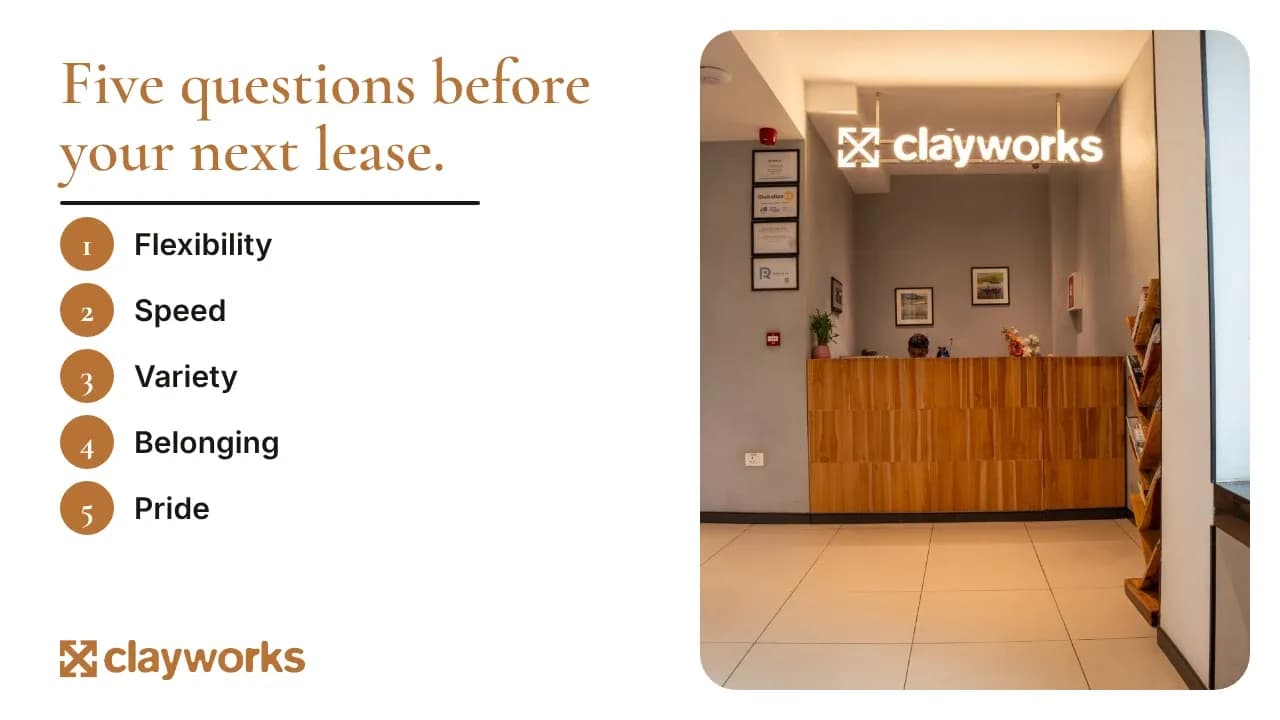
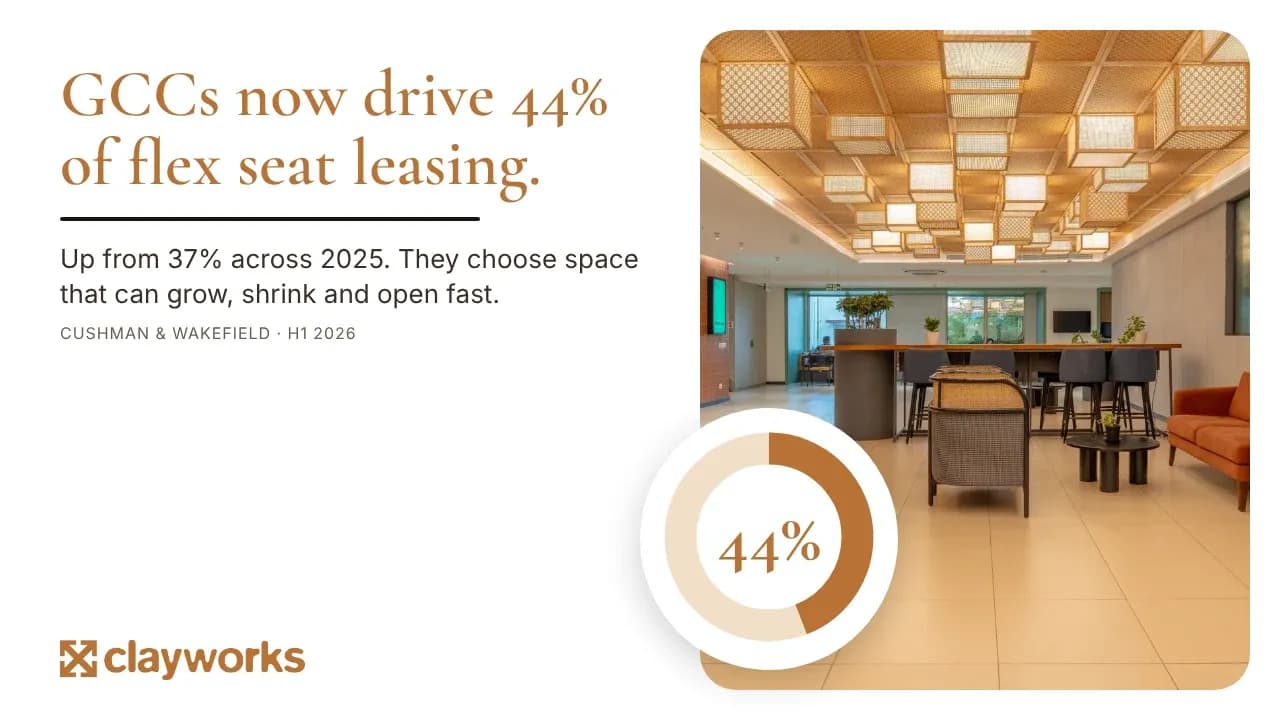
- A neighbourhood workspace is a commute policy. Clayworks has centres in Central Bangalore, Koramangala and across South Bangalore. Choosing a space nearer home is the cheapest way to give a team back its mornings.
The work ethic that is non-negotiable
In a city where 10 km can take 36 minutes, nobody believes in shortcuts. People believe in the route they trust. We feel the same about work. Our view is that three habits are non-negotiable, whatever the hybrid policy:
- Ownership. If it is yours, you finish it, or you say early that you cannot.
- Honesty about slippage. Bad news travels faster than traffic when people feel safe saying it.
- No shortcuts. The right way is often the slower way, and it is usually the one that holds.
The last one is close to home. A Claymate recently received a "No Shortcuts, Just the Right Way" award at Clayworks, and we cannot think of a better line for how we want to work. It is hard to measure, but the Steelcase research points in a similar direction: employees with access to three or more kinds of workplace space were 14% more likely to report shared accountability in their teams (Steelcase). That is a correlation, and a vendor finding.
Judge a workplace by its route
Before you commit to a space, try this. These are practical prompts, not research findings.
- Time the journey from your door to the desk, in rush hour, on a weekday.
- Check the last mile: metro, feeder bus, walking.
- Ask whether start times can flex around the worst of the traffic.
- Ask what the space offers on the days people come in for each other, not for a desk.
Your turn
What is your door-to-desk time today, and what would you give up for 20 minutes back? Tell us in the comments. Claymates, tell us where you work best from.
Join the conversation on LinkedIn